Suppression Rule Design Across Overlapping SaaS Campaigns
How to block the right messages when multiple campaigns target the same users.

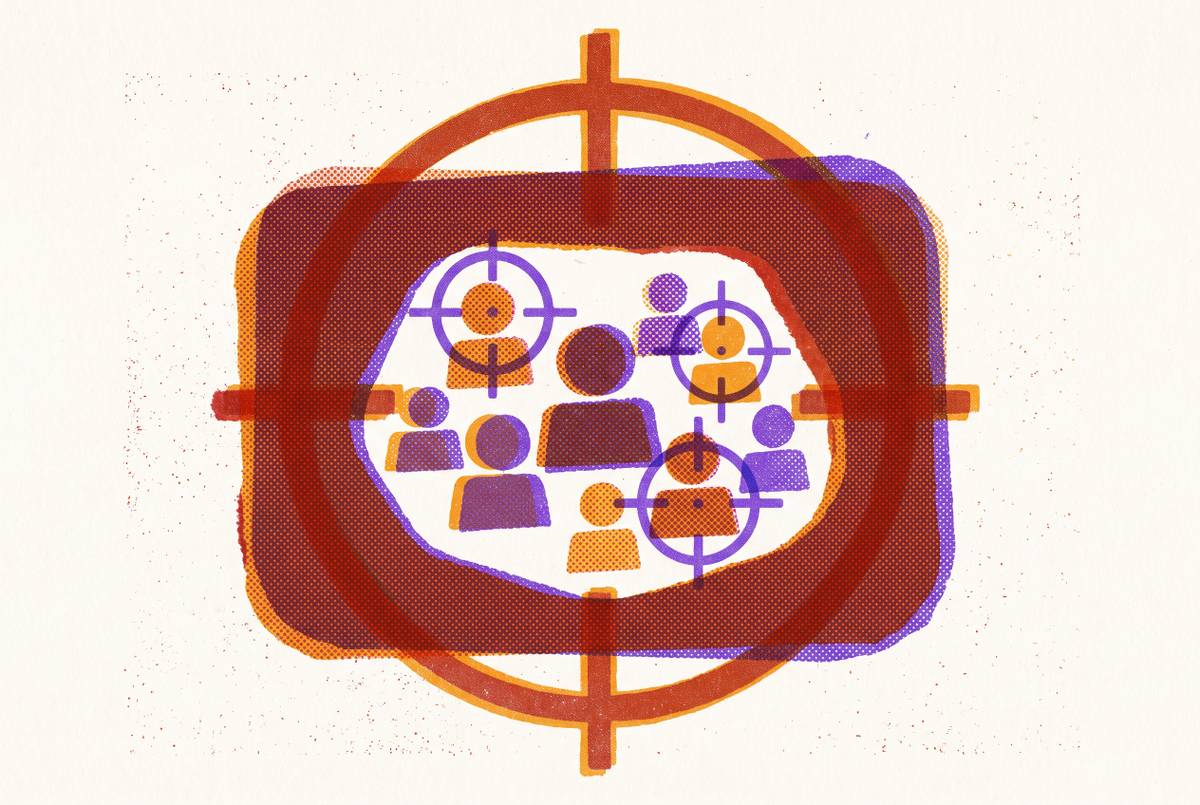
Suppression rules decide who, among the people who technically qualify for a campaign, should not get it right now. They are the control layer that keeps overlapping SaaS campaigns from contradicting each other, and designing them well means encoding three things every rule needs: priority, timing, and behavioral state. Get those three right, and a growth team can run five campaigns at once and still tell which one actually changed user behavior.
Overlapping campaigns create a signal problem, not just a volume problem
When several campaigns run at the same time against the same people, the real damage is that no single message can be read as a clean, intentional act anymore. A user who gets an onboarding sequence, a feature-launch announcement, and a re-engagement drip in the same week becomes unreadable as a data point: did they adopt the feature because of the onboarding nudge, because of the launch email, or in spite of the re-engagement attempt that assumed they'd gone quiet? There's no way to know, because three separate logics touched the same person without any awareness of each other.
This is what practitioners call email collision: the same recipient getting conflicting or redundant messages from campaigns that run on independent rules, each blind to the others. The fallout isn't limited to irritation. Recipients disengage or unsubscribe, removing them from the measurable audience and corrupting the exact cohort a team would need to evaluate whether any of those campaigns worked.
In B2B SaaS, you see the same breakdown happen at the account level. If an account deep in active onboarding also gets a dormant-user re-engagement message, it gets exactly the wrong signal at exactly the wrong moment. It tells the account it's been written off as inactive, which accelerates disengagement. The fix for this isn't sending fewer emails. Campaigns built independently will keep colliding until something sits above them, deciding who hears from whom and when.
How campaigns accumulate overlap
Overlap is the predictable result of campaigns built by separate teams with separate goals and separate audience definitions, all pulling from the same pool of users.
A typical SaaS campaign stack by Series B might include a lifecycle onboarding sequence, a behavior-triggered feature adoption nudge, a broadcast product update, a sales-assist message for accounts crossing a usage threshold, and a re-engagement track for accounts gone quiet. Each one gets built by a different owner, solving a different problem, with no shared view of who else is messaging the same user that week.
Two campaigns create one potential collision surface. Five campaigns create ten. Every new campaign added to the stack doesn't just bring its own audience: it potentially collides with every campaign that already exists, so the overlap grows faster than the campaign count does. This is why cross-firing journeys, where a customer qualifies for multiple campaigns at once, get described as "too common" in multi-campaign CRM environments. The root cause is campaigns that were never prioritized or aligned against each other to begin with.
When a team is small, manual suppression, built by hand as exclusion lists maintained campaign by campaign, holds up fine. A marketing team running two or three campaigns can keep a mental map of who's in what. But that approach becomes error-prone and unsustainable as the number of active campaigns grows, because no single person maintaining one campaign's list has visibility into the four other lists running in parallel. This is a structural tendency that gets worse with scale, not a one-time mistake a team can fix and move past.
What suppression rules control
Suppression rules are a distinct layer, separate from segmentation and separate from frequency capping. Segmentation decides who qualifies for a campaign. Suppression decides who, among those qualified people, shouldn't receive it right now, based on what else is happening to them across the rest of the campaign stack.
Frequency capping limits how many messages a person gets. Suppression can block a message entirely regardless of volume, because what makes that particular message wrong is the person's current state, not the number of emails already sent.
Campaign inclusion settings show this distinction in practice. An "Exclude All" setting means a customer won't receive additional campaigns for the duration of an active one. That's a decision rooted in campaign enrollment state, not in how many messages have already landed in the inbox.
Suppression has limits too. It can't fix a campaign whose audience definition was wrong from the start, and it can't stand in for behavioral eligibility logic built upstream. If a feature-adoption message gets sent to users on a plan that doesn't include that feature, no suppression rule downstream can repair that mismatch. Suppression manages collisions between campaigns that are each individually sound. It isn't a patch for a campaign that was misaimed to begin with.
The three dimensions every suppression rule must encode: priority, timing, and behavioral state
A suppression rule that only encodes one or two of these three dimensions, priority, timing, and behavioral state, will leave gaps. Messages that should be blocked get through. Messages that should go out get suppressed by mistake. All three have to work together.
Priority settles what happens when a person qualifies for two campaigns at the same moment. The suppression layer needs to know which campaign wins, and that ranking has to be set on purpose, not left to whatever fires first at send time. Manual priority fits campaigns that represent a brand's core commitments, onboarding being the clearest case. Automated priority fits discretionary campaigns where the stakes of a misfire are lower. The distinction carries real weight: a misranked onboarding message suppressed by a promotional campaign isn't a marketing inefficiency, it's a product failure, because the new user misses the single sequence most responsible for their early success. Priority ranking also has to live across the whole campaign stack, not inside any one campaign's own settings. A priority rule defined only within campaign A is invisible to campaign B's suppression logic, defeating the purpose of setting it.
Timing determines how long a suppression stays active, which in turn controls how fast a person becomes eligible for the next campaign and how cleanly that next campaign's results can be attributed to anything. Shorter campaign duration means less blocking. Customers move faster into the next relevant campaign, but the measurement window shrinks too, and late conversions can fall outside the period a team is measuring. Longer duration produces cleaner attribution because the window stays open longer, but it keeps customers locked into one campaign and slows down how responsive the whole stack can be. The right duration isn't an arbitrary number of days pulled from a template. It should match the window in which the campaign's intended behavior change could realistically occur.
Behavioral state is the most powerful signal of the three, because a confirmed product event proves the target behavior already happened, and that turns a campaign message from merely redundant into actively misleading. Database state (plan, role, configuration, feature access) combined with behavioral signals (which features a user has touched, whether an activation milestone has been reached) defines the correct eligible audience. Measure adoption against a denominator that includes users who were never eligible for the feature in question, and the resulting metric is deflated and the suppression target is wrong from the start. A suppression rule that fires the moment adoption is confirmed is the mechanism that keeps the "did behavior actually change?" measurement clean. measurement clean. Once the target behavior has occurred, any later message claiming credit for it is noise. Platforms built around product analytics, Userlens among them, query product data after a message sends to check whether in-product behavior actually shifted, and they treat that as the real measurement, not whether the email was opened.
Making suppression rules shared infrastructure rather than per-campaign afterthoughts
Per-campaign suppression lists fail because each list is invisible to every other one. A person correctly suppressed inside campaign A is a complete unknown to campaign B's logic, because the two lists were never built to talk to each other.
The structural fix is a shared suppression layer: one source of truth for enrollment state, behavioral state, and priority ranking that every campaign checks before it sends anything, instead of each campaign keeping its own private exclusion list. Orchestration engines evaluate campaign rules centrally instead of letting each campaign fire on its own, and that solves this by design. The rules engine has visibility across every active campaign at the moment it picks the next message for a given customer, applying priority and timing consistently across the whole stack.
For RevOps and data teams, shared suppression infrastructure pays off a second way: it creates an auditable trail explaining why a message was or wasn't sent. Which person, which campaign, which rule fired, which signal triggered the suppression. That record turns the system's reasoning into something inspectable, rather than a black box a team has to reverse-engineer after a customer complains.
Suppression rules enforce behavioral eligibility in real time, and they sit between a campaign's audience definition and the moment a message actually goes out. Tools built on product analytics data, where a person's current usage state is visible as it happens, can enforce those behavioral guards right at the send gate instead of relying on a suppression list built after the fact. That's what makes the line between "qualifies for the campaign" and "should receive this message right now" something a system can act on, not just a principle a team writes down and hopes campaigns follow.
A shared definition is what makes suppression rules work at all: build them on a term that means different things to different campaigns, and they fire inconsistently. If "activated user" means one thing to the onboarding campaign and something else to the feature-adoption campaign, any suppression rule built on that term will fire inconsistently, sometimes correctly, sometimes not, with no way to tell which in advance. Standardizing that definition once, in the shared layer every campaign reads from, is what makes suppression dependable as the campaign stack grows.
Designing campaign inclusion settings for the most common SaaS campaign types
Different campaign types call for different inclusion settings, and treating all of them the same way, either always exclusive or always open, produces one of two failures: a messaging blackout where nothing gets through, or uncontrolled cross-firing where everything does.
Always-on lifecycle journeys, the welcome sequence, onboarding, reactivation, should run with Exclude All inclusion and Manual priority. These represent a product's core commitment to a new user, and letting a discretionary campaign pre-empt them turns a product failure into a routine occurrence. Optional promotional journeys, newsletters and feature announcements, also warrant Exclude All inclusion, but Automatic priority works fine here: they shouldn't collide with each other, but an orchestration engine can rank them against other discretionary campaigns without a human setting the order by hand. Critical ad hoc communications, service alerts, policy changes, need Include All inclusion paired with Manual priority, because these are obligations that have to reach the customer no matter what else is active in the stack at that moment.
Real-time behavioral triggers, feature adoption nudges and expansion signals, call for Include All inclusion with Automatic priority, and this matters most for PLG and product teams who build onboarding emails around actual product usage. These campaigns are triggered by a specific product event, so they're meant to fire in the context of whatever else is happening to that user, not to replace it. Their suppression logic doesn't live in a rule that says "don't send while another campaign is active." It lives inside the trigger condition itself: don't send if the triggering event has already resolved. In practice, that means the product event that would have justified the nudge either hasn't happened yet or has already been acted on, so sending the message afterward would just be noise layered on top of a behavior the user already completed. For feature adoption specifically, the eligible group has to be users who have access to the feature and haven't yet adopted it, and the suppression rule should fire the instant adoption is confirmed, rather than on a fixed calendar schedule that might fire days after the user already figured it out on their own.
Measuring whether suppression rules are working
Suppression rules that are working appear as fewer messages sent. They show up as cleaner cohorts, more interpretable behavioral signals, and adoption numbers that reflect a genuine cause isolated from the noise of five campaigns firing at once.
The right measurement frame is cohort-and-milestone, not campaign-and-click. The intended behavior either occurred within the window the suppression duration defined, measured among the cohort that was actually eligible and wasn't suppressed for some unrelated reason, or it didn't. Separating people from accounts matters here too: an account-level suppression rule that blocks every user at a company because one user happens to be in an active campaign will also suppress adoption signals for other users at that account who should be getting independent guidance. The unit used for measurement has to match the unit used for suppression, or the two will quietly disagree with each other.
A workable pilot template looks like this: for a defined window, compare an eligible cohort against a holdout where that's practical, and capture the qualification rule, the trigger payload, the suppression events that fired, and the relevant product action. A strong result is evidence that the intended behavior changed within that window without creating attribution confusion against other campaigns running at the same time.
A few signs point to a suppression layer that isn't reading behavioral state correctly: adoption metrics that look strong in campaign reports but don't show up in product analytics, re-engagement campaigns firing against accounts that are actively mid-onboarding, or feature adoption rates measured against a denominator that still includes users who were never eligible for the feature. Any one of these means the rules are reading the wrong signal, or no signal.
Observed adoption after a message isn't proof that the message caused it. A user who adopts a feature right after getting a nudge might have adopted anyway, on their own timeline, regardless of the email. Suppression and measurement design should account for that distinction where possible, using holdouts to assign credit. Platforms like Userlens isolate this signal problem by design: each message ties to a specific person's observed product behavior after send, so adoption gets measured as a response to one grounded nudge instead of getting interpreted through the noise of five overlapping campaigns. Suppression functions as the scaffolding that any trustworthy behavioral measurement is built on. No campaign in the stack can honestly claim it caused anything without it.