Re-Engagement Sequence Architecture for Lapsed B2B SaaS Users
Diagnose why users lapsed before sending the same generic message to everyone.
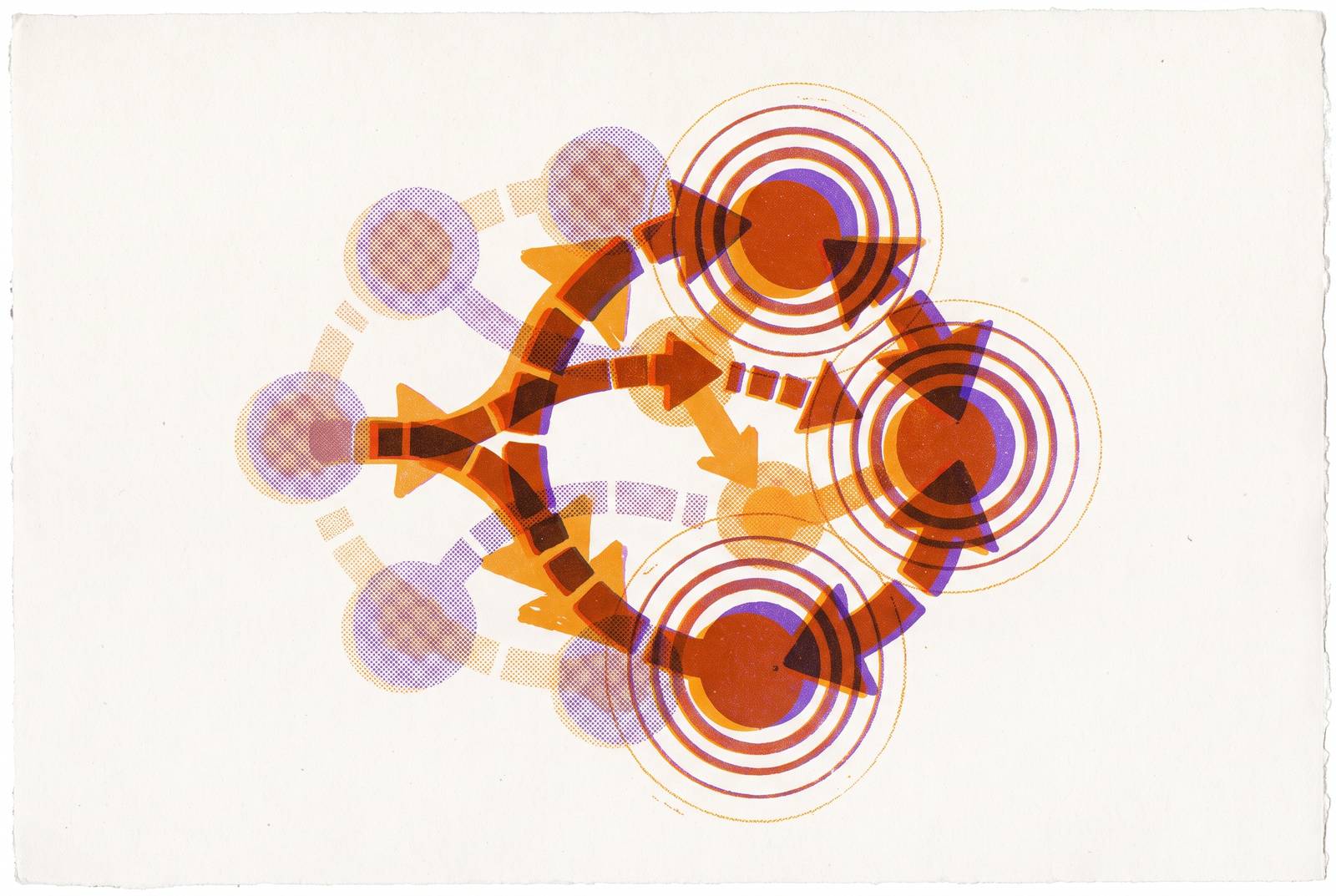
A lapsed user is not a category. Treating that label as a single, uniform condition is the mistake that sinks most re-engagement programs before the first email goes out. The cause of the lapse determines what the right intervention actually is, and two fundamentally different populations hide inside any dormant cohort.
The first group never reached activation. A re-engagement email is close to irrelevant for this group, because they have no reference point to return to. You can't remind someone to come back to something they never arrived at in the first place.
The second group is the opposite case: users who were activated, who used the product in a real way, and then stopped. What they need isn't a re-introduction to features they've already seen. They need a specific prompt tied to the exact thing they stopped doing.
A third distinction sits alongside these two and changes the psychology of the whole sequence: re-engagement (inactive users who haven't canceled) versus winback (customers who churned outright). The sequence aimed at them has to address the reason they left, not simply remind them the product still exists.
Sequences built without these distinctions tend to land on the same generic move: a "we miss you" email sent to everyone in the dormant list. Conversion stays flat no matter how many subject lines get tested, because the problem was never the copy.
Reading why someone lapsed before writing a single message
The signals that explain a lapse already exist inside most B2B SaaS stacks, in two places. The second is the account database: what plan they're on, what they have access to, and what role they hold inside their organization. Reading these two sources together, rather than either one alone, is what turns a guess into a diagnosis.
On the behavioral side, a few signals carry more weight than others. Among engagement signals, declining open rate, declining click rate, and dropping feature use all fire at different points, but the one that fires earliest is the one that matters most, because it gives a team the longest runway before the recapture window closes.
Account database state fills in what behavior alone can't explain. The user's role inside the account also determines the response: a champion who left the company is a completely different problem from an end user who simply stopped logging in. Checking whether teammates on the same account remain active matters, because a solo lapse inside an otherwise active account calls for a different response than silence across the whole account.
Before any copy gets written, a reactivation effort benefits from asking why the user or account went quiet. The answer changes the pitch entirely: a customer who left over budget responds to a different message than one who left because a key use case was missing from the product.
The gap between what should be happening, based on account state, and what is actually happening, based on behavioral history, is the diagnostic signal to track. That gap, read carefully, tells a team more than any single health score or sentiment metric could.
Defining "lapsed" in a way that is operational, not arbitrary
Before any sequence gets built, a team has to answer a deceptively simple question: what counts as lapsed? Applying one fixed threshold across an entire user base produces a cohort that doesn't actually hang together, because natural usage frequency varies by product type and by the role a user plays inside their account.
The threshold has to reflect the product's expected rhythm of use. A daily-use productivity tool and a quarterly reporting tool have completely different natural quiet periods. A user who hasn't logged in for two weeks is early-lapsed in the first case and right on schedule in the second. Copy and urgency level should shift accordingly, built around the product's own cadence.
Once that threshold is set, the lapsed cohort itself needs at least two sub-segments. The first is early lapsed: users who just crossed the threshold, still warm, and the most recoverable group in the whole pool. The second is deeply lapsed: users who are two to three times past the threshold. Start fresh with a full re-introduction, because anything else assumes a context they no longer have.
For B2B accounts specifically, lapse has to be measured at two separate levels: the individual user and the account as a whole. Solo-user silence inside an otherwise active account might need no re-engagement sequence. The right move there may simply be a colleague mentioning the feature in a meeting, not an email from the vendor.
The four-to-five touch sequence structure
A re-engagement sequence is a deliberate arc, where each message carries a specific job, and that job changes as the sequence moves forward.
The first email, sent one to two days after the threshold, is a low-pressure check-in. There's no offer and no urgency attached to it. If there's behavioral data available, a milestone the user is close to, or a feature they used and then dropped, that's the moment to surface it, because generic "here's what you're missing" copy underperforms copy tied to a user's actual behavior by a wide margin.
The second email, around day five to seven, is about value specificity. The call to action should deep-link straight to the relevant feature or flow, not the homepage. An email that mentions a specific feature needs to land the reader on that feature.
The third email, around day ten to twelve, offers a proportional incentive or asks for feedback. A two-question survey, or a single-click "tell us what happened" prompt, occasionally brings back users who just wanted to feel heard, and it hands the team real diagnostic data on why people are lapsing.
Framing like "did something go wrong?" works well here because it opens a conversation and invites a reply. The subject line should shift in tone at this point, moving from reminder to genuine inquiry.
The fifth and final email, around day twenty-one to twenty-five, is the sunset message, and it's the one most teams skip even though it may be the most important one in the sequence. Sunset emails frequently produce the highest re-engagement rate of the whole sequence, because finality creates a kind of urgency that fake countdown timers never manage to fake convincingly. The promise has to be kept: if the email says it's the last one, it has to be the last one. Non-responders should move to a suppression list immediately afterward, since continuing to mail dormant contacts damages sender reputation and deliverability for the entire list, not just for that one segment.
Cadence across the whole sequence should run roughly every five to seven days between touches. Sends spaced too far apart lose continuity and let the user forget the thread.
How segmentation inside the lapsed cohort changes what the sequence prescribes
A single sequence run against an undifferentiated lapsed cohort underperforms a branched version, even when the copy inside each branch is nearly identical. The reason comes down to the call to action: the next right step differs based on where the user actually stopped.
Recency of lapse is the strongest first branching variable available. One reactivation campaign split its cohort into three buckets: customers who churned in the last six months, customers who churned six to eighteen months ago, and customers who churned eighteen months or more ago. Without that segmentation, the campaign would have produced one flat, blended rate, with the cohort most likely to respond pulled down by the other two dragging the average down.
Lapse reason is the second branching variable. A user who left because a key feature was missing needs a pitch built around what's changed in the product since then. A user whose account went quiet after an organizational shift, their champion leaving the company, for instance, needs an entirely different re-entry point: often a new stakeholder inside the account, not another email to a contact who no longer has reason to open it.
Feature usage history at the point of departure shapes what gets prescribed next. In one case documented by Inflo, the team identified three new features shipped since customers had churned and matched each segment's email to the feature most relevant to that segment's original use case. The prescriptive move there wasn't "here's what's new." It was "here's what's new that matters to what you were originally trying to do."
What makes a message prescriptive rather than descriptive
Having behavioral data and using it to prescribe a next action are two different skills, and most teams only manage the first one. The useful pattern is prescriptive: "here is the specific thing to do next, based on exactly where you stopped."
The descriptive failure appears in a few recognizable ways. Reciting a user's own activity back to them, "you haven't logged in in 14 days," gives no direction at all and can read more like surveillance than help. For the user who got stuck early, it's not specific enough to get them unstuck.
The prescriptive pattern looks different. An effective re-engagement message reflects the user's actual history with the product, presents a piece of value they can act on immediately, and doesn't require a discount to make the decision worth it. The call to action deep-links to the exact feature or flow the message references, keeping the prescribed action one click away.
The line between useful personalization and surveillance-flavored personalization comes down to what the data is used for. Referencing inactivity duration as the message's main point, "you haven't been here in 21 days," uses the same kind of data to apply pressure instead, and pressure is less likely to convert and more likely to generate an unsubscribe.
The real distinction is between a dashboard that hands a team a chart of who's lapsed and a message that hands the lapsed user the next thing to do. The prescriptive output is the actual product of the sequence. The insight behind it is raw material.
Measuring whether the sequence moved behavior
Opens and clicks confirm that a message got attention.
For B2B specifically, the unit of analysis has to be chosen carefully. Account activation rate, activated accounts divided by newly eligible accounts, is the metric that captures whether re-engagement is working at the level that actually affects revenue. Retained adoption, meaning users who came back and stayed active into a later period, is a stronger signal than a single returning session, which might just be a one-time curiosity click.
Repeat use, not first use, is the signal worth building a measurement system around. A user who returns once and doesn't come back again within a defined window suggests the email did its job but the product failed to re-hook them. That's a product problem, separate from a sequence problem, and the two need to be diagnosed independently. A high open rate paired with no clicks means the email body isn't earning the action. A high click rate paired with no return sessions means the in-app landing experience itself is broken.
The denominator used for adoption measurement matters just as much as the numerator. Using total signups as the denominator skews results downward by folding in accounts that were never candidates for the sequence in the first place, and the eligible-cohort frame is what keeps comparisons across sequence variants honest.
Observed adoption after a message goes out isn't proof the message caused it. Some of those users would have come back on their own. Any team that needs to demonstrate real sequence value should, at minimum, compare the re-engaged cohort's behavior against a holdout group drawn from the same eligible population. And measurement shouldn't be a one-time report card. Contacts who engage with bottom-of-funnel content should move into a different sequence, so the lapsed cohort stays continuously refined rather than sitting static while the rest of the system moves on.
The architectural principle that makes re-engagement sequences scale without becoming generic
Most re-engagement sequences don't go generic because personalization is hard. The segmentation rules get set once and never revisited, even as the population they're applied to keeps changing underneath them, and that mismatch is what makes the sequences go generic.
The failure becomes visible at scale. A sequence written carefully for a cohort of two hundred users becomes a template run unmodified against twenty thousand. The fix is content that actually recognizes the relationship the user had with the product before they left.
An architecture that resists this decay separates two decisions that most teams collapse into one. The first is the campaign decision: who's eligible, what the goal is, what guidance applies, what limits are enforced. The second is the message decision: whether this specific person, given their current account state and behavioral history, actually warrants a message right now, and if so, what that message should prescribe. That decision gets evaluated independently, for each eligible person, every time.
Enforcing send-time rules, frequency caps, quiet hours, skip-if-evidence-is-weak logic, at the point where an individual message goes out, rather than baking them into campaign setup, is what keeps a sequence from sending something that was right for the cohort in general but wrong for the person in front of it. This is the model a re-engagement architecture is built around: campaign strategy set by a human, individual message decisions evaluated person by person against current data, so the sequence can answer, for any single recipient, why this message is right for them right now.
That question is the real test of any re-engagement architecture. If it can't answer why a specific message is right for a specific person at a specific moment, it's a broadcast with behavioral language sprinkled on top. The cost that used to force a choice between personalization and scale, the human time required to investigate and write for each individual, is the cost that has changed. What wasn't economically viable two years ago is now the baseline expectation for a sequence that actually works.