Behavior-Based Personalized Nudge Copy Frameworks
Combine account state with behavioral history to write nudges that actually convert.
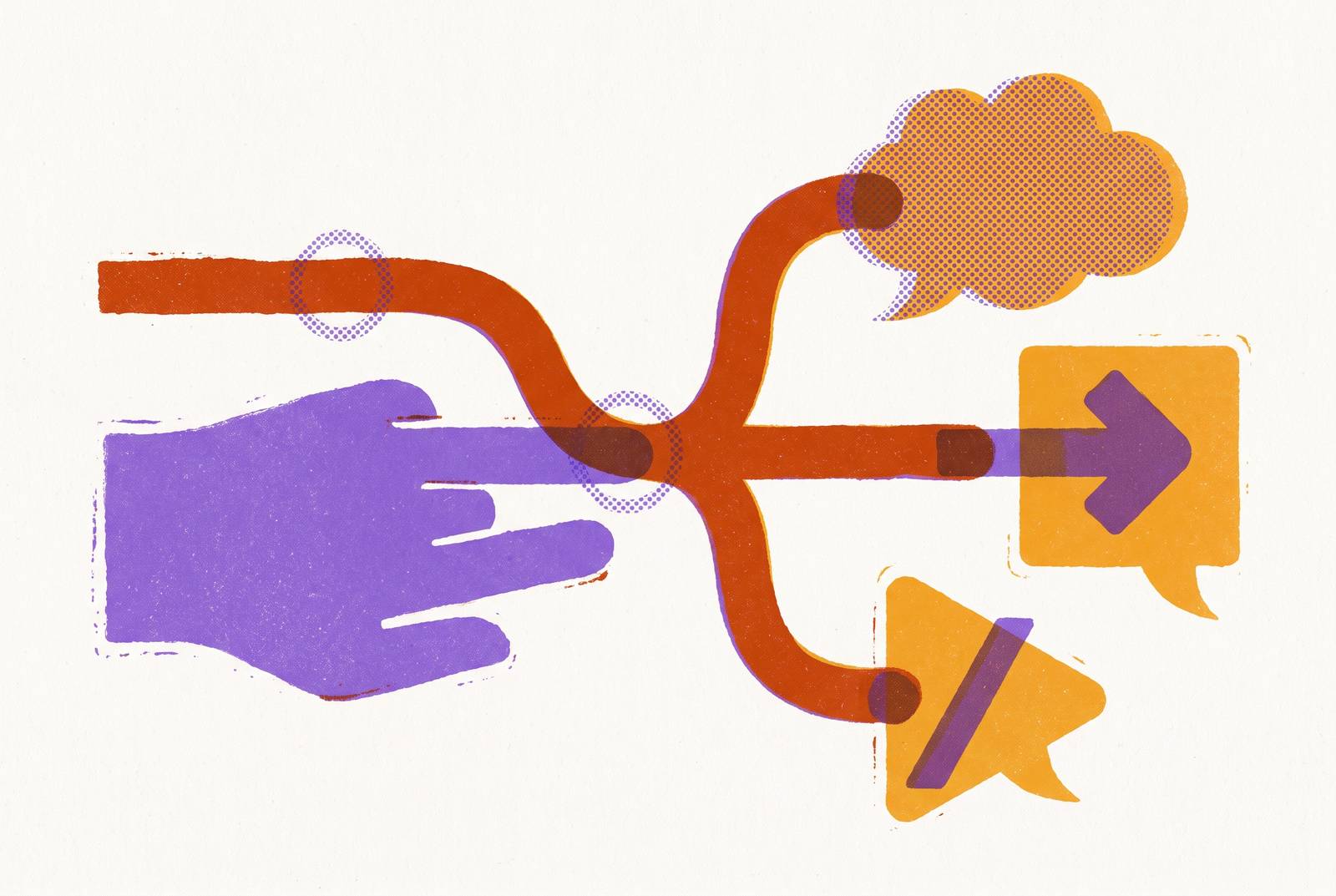
Grounded nudge copy needs two things at once, not one. First, the account's current state: plan tier, role, configuration, seats used versus seats purchased. Second, the behavioral history: what events got completed, which features got touched, which workflows got started and abandoned.
Neither input works alone. Current state tells you where someone stands, not whether they're ready to move. Behavioral history tells you what someone's done, not whether now is the moment to say anything about it. Putting the two together reveals a gap: the distance between what the account setup implies should be happening and what's actually happening. That gap is what the copy references, and it's the only thing that should drive what gets written.
Behavioral triggers beat time-based schedules, and the gap between them isn't small. A user actively working through the exact problem a feature solves is primed to hear about that feature. The same user, getting the same message three days later while doing something unrelated, is not primed at all, even though nothing about the message changed. Timing is doing almost all the work here, not the copy.
Most teams never get past a user table and a scheduled email sequence, and that's the real failure point. Without a unified store joining account attributes to event history in real time, teams default to the only pattern that doesn't require one: time since signup, time since last login. That's why so much "personalized" nudging in the wild is segmented broadcast with a first name merged in, dressed up to look like something it isn't.
Pattern 1: Adjacent completion, the user just finished the step that makes the next feature immediately relevant
The signal is specific: a user just completed a workflow that functions as a natural predecessor to something they haven't touched yet. Setting up a data source before building a dashboard. Inviting a teammate before assigning a task. Connecting a payment method before setting up recurring billing.
The gap: they've done the groundwork and nobody pointed them to what comes next.
Pick one action, not a menu. "You just connected your calendar, now set up automated reminders" beats a list of five features someone could explore. A list forces a decision, and a user asked to decide usually decides to close the email instead.
The copy that works says: you just did X, and that's why Y matters to you right now. "We noticed you finished setup" doesn't say that. It reports a log entry. "You just connected your calendar" names a transition in what the user can now accomplish. One's a status update. The other's a reason to act.
Pattern 2: Usage threshold, the user has hit a limit that signals they are ready for more
A different signal: someone or their account crossed a meaningful usage threshold. Seats filled to a high percentage of capacity. A report run a set number of times in a month. An add-on accessed repeatedly, past the point of casual curiosity.
The gap: the current plan no longer fits the work already happening. This user is outgrowing the product, and the plan hasn't caught up. They're outgrowing it, and the plan hasn't caught up.
The action has to be the exact fix. Skip "check out our plans." Name the specific upgrade or unlock that removes the constraint they already hit.
Product-led growth teams call these product-qualified expansion signals: usage thresholds and account milestones that indicate a user is ready for more. Expansion prompts fired at these exact moments outperform a generic upgrade email sent monthly to the whole base, and the reason isn't mysterious. A broadcast email catches someone mid-inbox-triage. A threshold-triggered prompt catches someone who just got told "you've used 9 of 10 seats" while trying to add the tenth. One interrupts. The other answers a question the user is already asking.
Pattern 3: Dormancy with a specific re-entry point, the user stopped before reaching value
The signal: a user who was active, got partway through onboarding, then went quiet, and never crossed into whatever counts as real activation for that product.
The gap is knowable, and that's what separates this from generic churn flagging. The distance between the last completed action and the activation threshold is a defined, countable quantity. It's a defined number of steps, countable from the event log.
The action is the exact next step from where the user stopped, never a full restart from step one. Restarting onboarding reads as a penalty for having tried already. Nobody wants to be sent back to the beginning because they paused once.
Only 12% of companies regularly and strategically re-onboard existing customers, which is a strange number given how much revenue is in accounts that have simply gone quiet. It explains why re-engagement copy defaults to "we miss you!" so often: most teams don't have the behavioral specificity to write anything more grounded, because most systems can't cleanly answer where, exactly, a given user stopped.
Pattern 4: Feature release to the behaviorally ready segment, announcing something new only to users who can use it now
Segmenting before sending creates relevance. Skipping that step and blasting everyone does the opposite: it nags people who adopted the feature months ago, and it lands on people who haven't done the prerequisite work to find it useful either way. Both outcomes waste the send.
The signal: a user has reached the workflow or account state where a newly released feature becomes immediately useful, specifically to them, right now, not eventually.
The gap here is almost administrative. The feature exists, it's live, and this particular user just hasn't been introduced to it at a moment when it actually matters.
The action is the specific in-app step that triggers first use, never "learn more" or "check it out." Those phrases hand the relevance decision back to the user. The nudge exists to answer that question, not pass it along.
The line between useful personalization and surveillance-flavored copy
The line comes down to what the copy surfaces and how it frames it, nothing more mysterious than that.
Useful personalization references a transition that meant something: a gap the user actually ran into, a milestone they're one step from finishing. Reading it, the reason for the message is obvious inside a second or two. Surveillance-flavored personalization recites the click trail back, noting that the user clicked X, then Y, then Z. It can be completely accurate and still feel like being watched, because it exposes the tracking mechanism instead of the reason the tracking mattered.
Buyers evaluating software going into 2026 expect adaptive behavior: adjustments by role, by workflow stage, by account context. That expectation comes paired with another one, that the adaptation stays explainable. If a user can't figure out, fast, why they got a particular message, trust erodes, and it doesn't come back just because the next message is better targeted. Explainability is the one mechanism keeping personalization from curdling into something invasive. Lose it, and no amount of accuracy in the targeting will save the message.
How the signal-gap-action spine scales from manual copy to campaign-governed agent messages
Writing signal-gap-action copy for one user is a craft exercise. Look at the account, look at the event history, draft a sentence. Scaling that to ten thousand users, each with a different signal and a different gap, is a different problem entirely, and it doesn't get solved by writing faster.
The usual fallback scales by stripping out the specificity that made the pattern work. Write one message per segment, merge in a first name, call it personalized. That's template personalization with a behavioral trigger bolted onto the send condition. That's template personalization with a behavioral trigger bolted onto the send condition: the trigger fires on real behavior, but the message itself never reflects it.
Campaign governance handles this differently: it changes where the judgment sits. A human sets the goal, defines the eligible audience, writes guidance for what kinds of messages fit the moment, and sets the limits: frequency caps, quiet hours, rules for who never gets contacted. That approval happens once, at the campaign level. Inside that boundary, a message-writing agent investigates each eligible person on their own terms and drafts copy grounded in that specific signal and that specific gap.
Eligibility isn't the same as guarantee. A user with a weak or ambiguous behavioral signal should get skipped entirely, not sent some watered-down version of the campaign message just to hit a quota. Whether a system scales the pattern or just scales the broadcast comes down to knowing when to say nothing.
Measuring whether the copy pattern worked: behavior change, not open rates
Open rates answer the wrong question. Behavior in the product changing after the message landed is what matters, not someone glancing at a subject line on the way to archiving it.
Define the eligible cohort with precision: users who received the message and actually had the permissions, plan tier, and account state to take the prescribed action. Then measure what share of that exact cohort completed the specific action inside a defined window afterward. Nothing looser than that counts.
Accounts and people aren't the same unit, and treating them as interchangeable hides the real result. An account can show feature adoption because one power user picked it up, while every other person who got the nudge changed nothing. Account-level dashboards smooth right over that and make one champion's behavior look like broad success across the team.
Even a clean adoption number doesn't prove the message caused anything. Someone who got a nudge and then adopted a feature might have adopted it anyway, on their own timeline, for reasons that had nothing to do with the message. Proving actual lift, not just correlation, takes a comparison cohort running in parallel: a group that didn't get the nudge, so the adoption rate of the nudged group has a real baseline to be measured against instead of an assumed one.
Sources
- SaaS Behavioral Segmentation for Retention & Expansion
- Feature Adoption: The Complete Guide for B2B SaaS Product Managers | Jimo
- The Missing Piece: How Behavioural Integration Unlocks AI Personalisation in B2B SaaS by Sabrina V. :: SSRN
- Behavior-Driven Messaging for Enterprise SaaS Companies
- Personalization for SaaS Onboarding: Activation in 2026
- The Ultimate 2026 Guide to Behavioral Triggers for Sales – Reply
- artisangrowthstrategies.com
- poweredbysearch.com