Coordinating Product-Led and Sales-Led Outreach in a Shared Campaign Calendar
A shared calendar prevents product and sales teams from messaging the same person simultaneously.
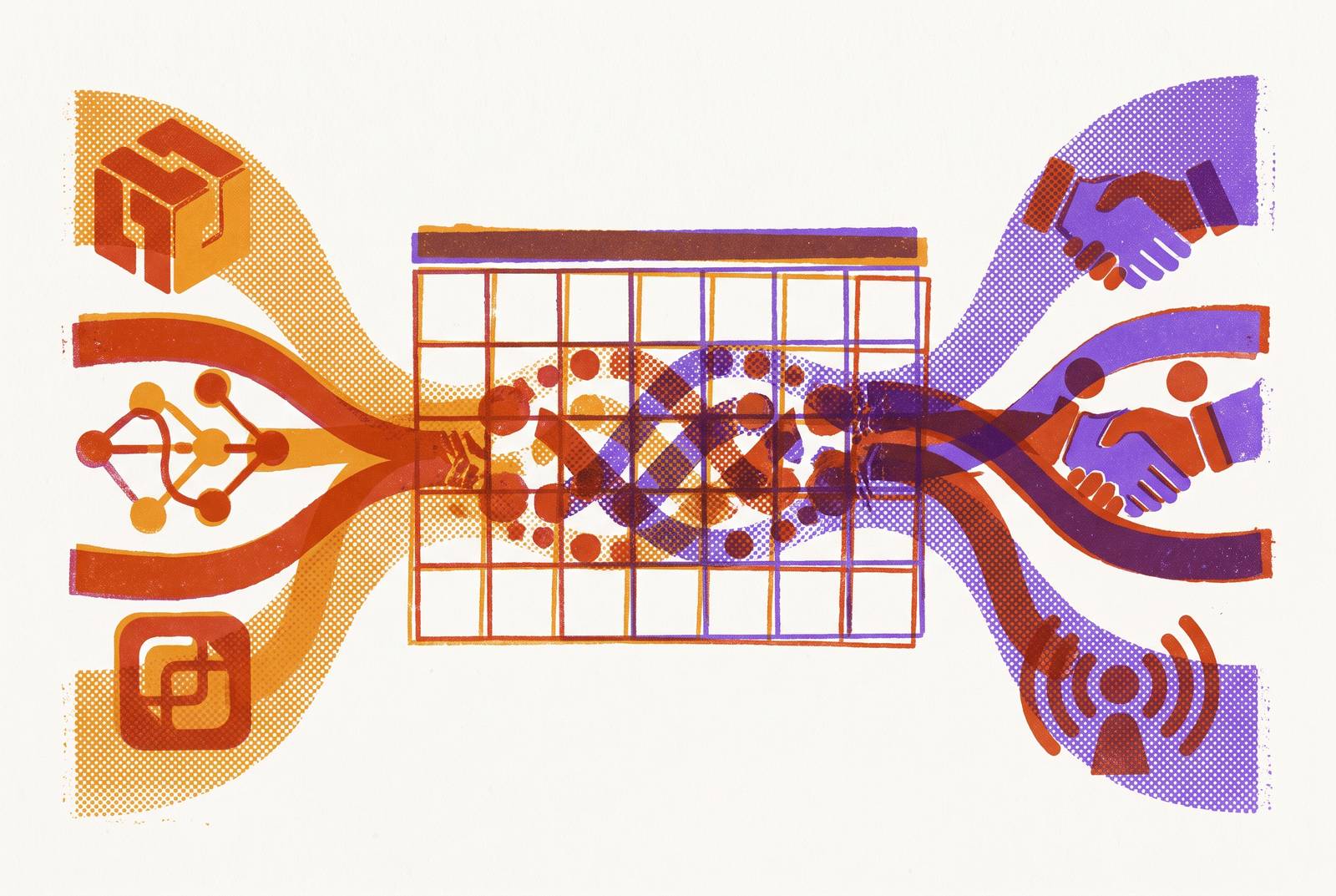
A hybrid go-to-market motion runs on two different engines. Product-led outreach fires when a user does something in the product. Sales-led outreach fires when an account looks ready to buy. Without a shared calendar, both engines can hit the same person on the same day for different reasons, and neither team knows it is happening.
Why hybrid GTM creates an outreach coordination problem that a shared calendar must solve
The logic of each motion is fundamentally different. PLG outreach is triggered by product behavior: a user reaches an activation milestone, invites a teammate, or hits a plan limit. Sales outreach is triggered by pipeline stage, territory assignment, or account potential. The two triggers do not talk to each other, which means they can fire at the same person at the same time for entirely different reasons.
The phrase "product qualifies, sales closes and expands" sounds like a clean handoff. It assumes a sequence: the product does its work first, then sales steps in. That sequencing assumption breaks down when the two motions run without a shared coordination layer. A user who is deep in a sales conversation can simultaneously be receiving product-triggered nudges designed for someone still exploring on their own.
The problem compounds at the campaign level. A major launch, an executive event, and a high-value content campaign may each look manageable in isolation. Run them simultaneously and you stretch creative, sales, and customer-facing teams past their capacity. A shared calendar makes those conflicts visible while there is still time to adjust. Without it, the conflicts surface only after the outreach has already collided, which is too late.
The calendar is not a scheduling tool. It is the coordination layer that determines which motion speaks to a person, when, and why. That is the only way two different outreach engines can operate on the same accounts without producing noise.
What a shared campaign calendar is actually coordinating in a hybrid GTM
A shared campaign calendar in a hybrid GTM is not a content schedule or a publishing queue. For a pure content team, a calendar tracks what gets published when. For a hybrid GTM team, it tracks who is being contacted, by which motion, for what reason.
The calendar must carry more than dates. A useful checklist to adapt here covers campaign objectives, distribution plans, timelines and dependencies, resource allocation, and performance tracking. The hybrid context adds one element that a content calendar never needs: the suppression rule.
The distinction between a marketing calendar and a campaign calendar matters. A campaign calendar handles the tactical execution of a single initiative. A hybrid GTM team needs both views: a top-level coordination view that shows all motions against each other, and a per-motion execution view that shows each campaign running correctly on its own terms.
The calendar also needs to surface dependencies. If a sales rep is scheduled to reach out to an account this week, a product-triggered re-engagement message to a user at that account should be suppressed or sequenced. That dependency is invisible without a shared view, because the two motions live in different tools, run by different teams, with different notions of what constitutes a good reason to contact someone.
Signal ownership: which motion speaks first, and when it hands off
The central design question for a hybrid campaign calendar is not "what should we send" but "which signal belongs to which motion, and at what threshold does ownership transfer from product-led to sales-led." Answer that question well and the calendar coordinates. Leave it unanswered and the calendar becomes a shared view of chaos.
PLG outreach is appropriately triggered by behavioral signals. A user completes a core workflow, activates a key feature, invites a teammate, or hits a usage threshold that indicates expansion readiness. The product is the best judge of whether a user is getting value.
Sales outreach is appropriately triggered by PQL status, account-level signals like multiple users activating, or territory and ICP criteria. That is what happens when signal ownership is undefined: both motions default to the same fallback, which is scheduled broadcasts driven by date rather than behavior. That pattern is precisely what creates noise for the same person.
The product-qualified lead is the handoff point. At that point the signal belongs to sales, not the PLG motion. The calendar's job is to make that transfer explicit and visible to both teams.
A working signal ownership map answers three questions for every trigger event. And what happens if neither condition is met: who holds, and for how long? The third question is the one teams forget, and it is where unresolved signals pile up.
Why behavior-triggered outreach must anchor the PLG side of the calendar
A PLG motion that runs on scheduled sequences rather than behavioral triggers is not a PLG motion. It is lifecycle email with a free trial attached, and it will perform like one. It reaches users who left after five minutes with the same message as users who activated yesterday. The message cannot be right for both of them.
The structural problem with calendar-based PLG outreach is that it treats all users in a cohort as equivalent at the moment they entered. Some have activated, some have churned, some are expanding. A single timed message addresses none of them accurately, because it was written for the person they were on day one, not the person they are today.
Behavior-triggered messages are sent only when a specific product event justifies them: activation, feature discovery, team expansion. The calendar's job is not to schedule the message. A user at an account already in an active sales sequence should not receive a product-triggered onboarding nudge for the same feature the account executive is planning to demo. The calendar is the only place that conflict is visible before it happens.
The principle is to skip if the evidence is weak. The calendar should encode not just when to send but when to hold. The hold condition is as important as the trigger condition, because holding is what protects the sales motion from a flood of product messages that undercut it.
Guardrails that prevent the two motions from colliding on the same person
A shared calendar without enforced guardrails is a schedule, not a coordination layer. Guardrails are what turn visibility into protection. Four types carry most of the weight.
Frequency caps are the first. A person in an active sales sequence should be suppressed from product-triggered outreach for a defined window. The calendar must encode this as an explicit rule, not leave it to individual judgment at send time. The inverse also applies: a person receiving a product-triggered onboarding series should not simultaneously enter a sales cadence. The PQL threshold, not the calendar date, is what should trigger the handoff.
Never-contact flags and quiet windows are the second. A flag set in one system must propagate to the other. The calendar is where that cross-team visibility lives, because both teams consult it before sending anything.
Stage-gating is the third. The calendar should enforce a rule that certain campaign types, re-engagement, expansion nudges, upsell prompts, are only eligible once a person has cleared a defined product milestone. Without stage-gating, the motions collapse into a single undifferentiated outreach stream, and the product's own signal about readiness is ignored.
Cross-team visibility is the fourth, and it deserves the most attention because it is the most common failure mode. A shared calendar view, accessible to both teams, is the only structural fix. The problem is not software, but it requires software that makes cross-team state visible.
How to sequence the two motions so each amplifies the other
When signal ownership is clear and guardrails are enforced, the two motions can be deliberately sequenced. Product-triggered outreach primes a person for a sales conversation. Sales outreach reinforces what the product has already taught the user. Each motion makes the other more effective.
The sequencing pattern that works is straightforward. PLG outreach handles first-value delivery, feature discovery, and activation nudges, creating a user who has experienced the product and can articulate what it does. Sales outreach enters at the PQL threshold, when that experienced user is the most credible champion inside an account. The user arrives at the sales conversation already knowing the product's value, which makes the conversation about expansion rather than education.
The calendar's role is to make the handoff moment explicit. Not "sales can reach out to PQLs" but "on the day a user crosses the PQL threshold, the PLG motion pauses, the sales team is notified, and the next contact is owned by the account executive." That single calendar entry removes the ambiguity that otherwise produces either a gap or a collision at the handoff.
The benchmarks bear this out. Figma appears alongside both as a benchmark for PLG acquisition and expansion. The pattern is consistent: product motion first, sales motion at the point of demonstrated readiness.
Amplification also works in reverse. But only if the calendar shows the sales event to the PLG team, so the message can be coordinated rather than coincidental. The calendar turns a random touch into a deliberate setup.
What each team must own in the shared calendar and how to define those boundaries
A shared calendar without ownership boundaries becomes a political object. Everyone can see it, no one can change it without conflict, and the team with the most organizational leverage wins every scheduling dispute rather than the motion with the strongest signal. Ownership must be explicit from the start. The growth and PLG team owns the behavioral trigger definitions, the activation milestone criteria, the eligible audience rules for product-triggered campaigns, the frequency caps on the PLG side, and the suppression rules that apply when a sales motion is active on an account. These are the inputs that determine whether the product motion fires at all. The sales team owns the PQL follow-up sequences, the account-level outreach plans, the enterprise negotiation flags, the quiet windows for accounts in active deal stages, and the signal that triggers the PLG suppression rule. These are the inputs that determine whether the sales motion fires and when the product motion must stand down.
Three things require shared ownership and explicit agreement. And the measurement framework that determines whether each motion achieved its intended outcome is shared by definition. A quarterly review cadence, with both teams reviewing the calendar together before each quarter begins, is the operational mechanism that keeps ownership boundaries from drifting as the business changes.
Measuring whether each motion achieved its intended outcome, separately
The most common measurement failure in a hybrid GTM is collapsing both motions into a single funnel metric: conversion rate, pipeline generated. That makes it impossible to tell whether the PLG motion or the sales motion drove the outcome, or whether one undermined the other. Separate measurement is not a nice-to-have. It is the only way to know if the coordination is working.
PLG motion outcomes should be measured at the individual user level. Not "did the campaign generate pipeline," which is a sales metric applied to a product motion. The calendar should encode which event constitutes adoption for each campaign.
Sales motion outcomes should be measured at the account level, separated from the users who were in PLG sequences. Expansion revenue on accounts that entered sales after product qualification. These are the metrics that tell you whether sales is picking up what the product motion produced.
The shared measurement the calendar should track is the handoff itself. One honest note: the calendar can track behavior change after outreach, but it cannot establish that the outreach caused the change without a comparison group. Observed adoption and causal lift are different things, and a careful measurement framework states the distinction.
Where behavior-grounded adoption agents fit into a coordinated campaign calendar
The coordination principles established throughout, signal ownership, behavioral triggers, guardrails at send time, per-person judgment rather than cohort blasts, describe exactly what an adoption agent is designed to do at scale. The agent is the PLG motion made operationally scalable. An adoption agent reads each person's current product state and behavior over time. It writes the message that person's evidence justifies. It enforces frequency caps and suppression rules at the point of send. And then it queries product data to answer whether behavior in the product actually changed. The calendar coordinates when that message is appropriate to send. The agent decides whether the evidence justifies sending it.
A campaign in this model operates at two levels. The human sets the guardrails. The agent applies them per person.
The practical advantage for a hybrid GTM team is that suppression rules can be encoded into the campaign itself. The agent enforces that at send time without requiring per-message human review. The guardrail becomes a property of the campaign, not a decision someone has to remember to make.
Building the calendar: the practical sequence for getting both motions into one shared view
A shared campaign calendar does not require new infrastructure. It requires an explicit decision process that produces the ownership map, signal definitions, and guardrail rules before any campaign is added to the calendar. The sequence is six steps.
Step 1: map every existing outreach motion against a common timeline. Lay them out side by side to surface the conflicts that are currently invisible. Define what success looks like for each motion separately before combining them into a shared view.
Step 2: define PQL thresholds and activation milestones jointly. Growth and sales in the same room. The handoff signal must be agreed before the calendar is built, not negotiated case by case afterward.
Step 3: encode guardrails as calendar-level rules. What the frequency cap across both motions is for a single person in a week. Which account states trigger a complete hold.
Step 4: assign ownership to each campaign type. PLG team, sales team, or explicit joint ownership. Make that ownership visible to both teams in the shared view.
Step 5: define the measurement events for each motion before launch. What product event constitutes adoption rather than usage? Answer these before the campaign runs.
Step 6: schedule a quarterly joint review. Both teams assess the calendar together, review handoff data from the previous quarter, and adjust ownership rules and thresholds based on what actually happened. That review is the mechanism that keeps the coordination layer honest over time, because the business will change, and the calendar must change with it.